Thursday, January 3, 2008

New Year's Resolutions for Everyone Except Me!

by Bill Kalmar

Now that I have your attention, let me explain. This year I will enter a very special age group, namely, those people eligible for Medicare. The magical age of 65 provides one with certain mystical rights—Medicare benefits, of course, which means we’ll be swimming in extra disposable income. Yeah, right! And how about another increase in social security benefits without having to endure a performance review! And most importantly, the removal of all vestiges of political correctness, as if that ever encumbered me!


An added benefit is moving into the 65–69 age group for competing in sporting events or, as it’s sometimes referred to as “65 to death.” For those of you who may be runners you know that I will now be the youngest in a group of runners vying for prizes given only to the first three finishers in each age group. Not that this makes for a significant advantage because in my last 10K (6.2 mi) race, I was roundly beaten by a 72-year-old. I wonder if he passed the drug test.

In any event, I no longer have to make any New Year’s resolutions because changes to my lifestyle at this juncture could be injurious to my health, well being, and mental acuity. For me to make any personal resolutions would be a waste of time and thus I’m making them for all of you. Just chalk it up to senility.

Here’s what I’m proposing for 2008:

  • I resolve that all wait staff in restaurants pay attention to me while taking my order and quit looking around to view other activities that may be going on in the restaurant. If I’m not the center of attention then perhaps my waiter should extract the tip for my meal from the people he or she is so attracted to. Is it too much to ask that the wait staff at least appear to be focused and interested in providing me with exceptional customer service?
  • Speaking of restaurants, I resolve that all establishments serving food leave the hot water valve on in the restrooms. How many times have you encountered a restroom sink that only has cold water? I have a confession to make in that regard. On a regular basis when I discover a lack of hot water, I instinctively reach under the sink and turn on the hot water valve, which inexplicably has been turned off. On some occasions, I have even used my handy Swiss Army knife to override the system. How the wait staff washes their hands with cold water is beyond me. So next time you visit a restroom at McDonalds, Wendy’s, or Burger King and the water is hot, you have me to thank for it.
  • I resolve that all phone calls I make in 2008 don’t contain the message: “For quality purposes this call may be recorded or monitored by a supervisor.” Do we really believe that someone is hired specifically to listen to phone calls all day? At one point in my career I managed a customer service telephone area and we found it just as effective by practicing “management by walking around” and overhearing the representatives rather then listening to reams of recorded messages at day-end. If there is to be a phone message I recommend that it be: “For truth of disclosure purposes, this call is not being monitored because we’re tired of fooling you to make you think that it is.”
  • I resolve that when executives are released from an organization the words “Leaving to devote more time to other activities and family” be fully explained. What are those other activities and what does his or her family have to say about the executive's sudden arrival on the home scene? Is the family happy and content or would they rather the executive just focus on those “other activities.” Just when you thought you have heard all the reasons for someone to depart an organization try this from global chief growth officer Thomas Hernquist who spearheaded Hershey Co.’s premium and dark chocolate portfolios and who resigned from the company effective December 31. Hernquist said he intends to work on ventures that “leverage strategic consumer insights.” Wow! That is just too cerebral for my soon to be 65 year old brain! Why couldn’t he have just said that he was pursuing other activities? Or my favorite: “Leaving so I can function in a jerk-free environment.”
  • I resolve that the words “merger of equals” and “synergy” be banned from business jargon forever. We all know that there is no such thing as a merger of equals—Daimler-Chrysler certainly proved that. In a merger there is always one dominant party and thus synergy means “We will look for ways to combine our processes but ultimately we bought your company so our processes will be used.” If that sounds cynical on my part, I think it’s also realistic. I, along with many of you, have been through mergers and frankly none have been pleasant. So for 2008 let’s substitute the words “Full court press take no prisoners buy-out” for “merger of equals.”
  • I resolve that when organizations release staff because of the company’s desire to “go in a different direction” that new “direction” or strategy should be spelled out to the remaining staff and the shareholders. What if the new direction is contrary to the expectations of those who will now have to implement it?
  • I resolve that all meetings start and end on time. In that regard, let me share with you the thoughts of two captains of industry on being punctual. First, Bob Iger, President and CEO of Walt Disney:“Meetings need to start on time. I’m zealous about that because my day needs to be managed like clockwork. If people are late for meetings, the meetings tend to go late, which throws off my agenda thereafter. I frequently start the meeting even if all the people expected to be in attendance aren’t there. I don’t need to say to people, ‘Be on time’, they know.”

And this from Simon Cooper, president and chief operating officer of the Ritz-Carlton Hotel Co.: “I’ve always believed that if you’re late, it says something about the lack of value you have for other people’s time. Being on time for all meetings is the best use of time in the workplace. I hope I’ve instilled that in my staff. I certainly embarrass them if they’re not.” That pretty much sums it up for me. One other comment and that is at the end of a meeting if someone leaves without an assignment that person wasn’t needed at the meeting and shouldn’t be invited back for subsequent meetings on the same topic.

  • I resolve that all establishments that imprint a survey request on receipts provide me with on the spot reimbursement for completing the survey. Over the years I have completed surveys for every department store, coffee shop, bagel store, and sundry other establishments without benefit of a thank you. Sure the receipt indicates that I have been entered into a drawing for $5,000 but I doubt it. Just the other day I asked the Barista at a local coffee shop if he was aware of anyone who had ever won a cash prize by completing a survey and of course the answer was a resounding “No.” So from now on, I want a free coffee or bagel for completing the form.

Well, those are just some of the resolutions for all of you for 2008. If I sound like the fictional deranged character Howard Beale from the movie Network when he said, “I’m as mad as hell, and I’m not going to take it anymore,” so be it. At my age I think I’ve earned it and, yes, I am feeling a bit deranged from service expectations not being to my liking especially when it comes to hot tap water in restrooms. Does Medicare cover my idiosyncrasies?

Just so you don’t think that I’m bonkers, I want to make one resolution of my own. That is that you the readers of QualityInsider continue to invite me into your offices and homes for another year. I thoroughly enjoy the relationship with the experienced and professional staff of the publication and how they make me look so good each month. I also resolve to provide you with some thoughts on quality and customer service and other pertinent topics that hopefully you will find interesting, informative, and perhaps even humorous.

Now time to retreat into my ice-covered hammock. If some of my resolutions have left you perplexed and troubled just keep in mind the words of comedian Joey Adams when he uttered: “May all your troubles last as long as your New Year’s resolutions.”

About the author
William J. Kalmar has extensive business experience, including service with a Fortune 500 bank and the Michigan Quality Council, of which he served as director. He has been a member of the Malcolm Baldrige National Quality Board of Overseers and a Baldrige examiner. He’s also been named quality professional of the year by the Detroit Chapter of ASQP. Now semi retired, he’s a freelance writer for the Detroit News; writes a monthly column for Mature Advisor newspaper; is a mystery shopper for several companies; is a frequent presenter and lecturer; does radio voice-overs; and competes in duathlons.

Monday, December 17, 2007

What Keeps You from Creating an Attitude of Abundance in Your Life?

by Tom Hinton

It seems the faster I peddle the farther behind I get!

The harder I try, the more I fail.

Everything I touch turns to mush.

It never rains, it pours.

Success is always just around the corner.

All the good men are already taken.

I never have enough money!

I hate my job.

My family doesn’t understand me.

Life is all work and no play.

These are just a sampling of the responses people have shared with me during The Course of 10,000 Days retreats when I’ve asked the question, “What keeps you from creating an Attitude of Abundance in your life?”

Most Baby Boomers have been conditioned to think and act the way we do because we were raised in a guilt-ridden culture that repeatedly sent such messages as ‘you are imperfect;’ ‘you are unworthy;’ ‘you need to be realistic;’ and, ‘lower your expectations.’ It should come as no surprise that many people have unintentionally sabotaged their life dreams by giving up on themselves before they’ve even put forth an honest effort to make their dreams a reality.

How can you undo this negative conditioning and create an Attitude of Abundance? Here are three steps we teach during The Course of 10,000 Days retreat to help people transform their lives from mediocrity to one of purpose, peace, and passion.

1. Challenge Your Beliefs and Values. So many of the beliefs and values we learned as impressionable children are negative, limiting, and create a “co-dependent” mindset. As an adult, it’s time you put your beliefs on trial and challenged them. Are they valid? Do they lead you to success in life or do they create barriers for success and make you dependent upon others? Do you believe what you’ve learned because your parents or teachers told you it was so? Or, have you closely examined those beliefs and values in the context of what your goals and aspirations are? I’m talking about the values and beliefs that presently guide and control your life decisions. Let me give you an example.

Marcia is 44 years-old. She is single and works as a marketing representative at a large Chicago law firm. Marcia told me her boss, who has a Masters Degree in Marketing, makes life difficult for a number of employees at the law firm who do not have at least a college degree despite their hard work and contributions to the law firm’s marketing and administrative functions. When I asked Marcia why she didn’t change law firms, she told me she didn’t think she could get a better paying job without a college degree.

As I analyzed Marcia’s current belief system and values, and how she can create an Attitude of Abundance in her life, I concluded that Marcia suffered from two negative beliefs that were limiting her success in life. The first is “Co-dependency.” If Marcia truly believed in herself she would not be dependent on her boss, who needs minions like Marcia in order to exert her abusive authority and play mind games with subordinates. There is no reason for someone to stay in a job when they are not respected. But, in Marcia’s case, she played into the co-dependency games of her boss who took advantage of Marcia’s low self-esteem by holding her back in life.

The second negative belief that inhibited Marcia’s success in life is “Unworthiness.” Marcia mistakenly thought that a college degree is the only standard of success by which she will be judged in life. Certainly, there are some jobs that require a college degree. But, in Marcia’s case, she is a talented marketing representative who gets results. She has a good track record. These are skills that most companies want in an employee regardless of their formal education. But, Marcia had convinced herself that no one would hire her without a college degree. I told Marcia that she would be no worse off if she contacted other law firms, sent them her resume, interviewed with them for a job, and didn’t get hired. In other words, she had everything to gain and nothing to lose by trying.

By appealing to Marcia’s negative belief s and limiting values (“I’ve got nothing to lose by sending out my resume!”), I was able to convince her to send her resume to five law firms that enjoyed excellent reputations as outstanding employers. Within two weeks, two law firms contacted Marcia and interviewed her. The happy ending is that last week Marcia politely quit her job and accepted a new marketing position that now pays her more and gives her more responsibility. Marcia’s self-esteem is higher and she now feels valued. At the same time, Marcia is continuing to work on undoing many of the negative beliefs that inhibit her success. She realizes that it does her no good to change jobs while continuing to carry the same negative beliefs and limiting values that held her back in life. It’s a challenge, but Marcia’s making significant progress.

2. Define Your Own Success in Life. It’s astonishing to talk with people and learn that the reason they never tried to achieve their life dream is because someone told them that it wasn’t possible! Regrettably, the worse offenders are usually those persons we love and respect the most -- our parents, siblings, teachers, relatives, and ministers. Understandably, much of my Baby Boomer generation grew-up with parents who survived the Great Depression in the 1920s and ‘30s. Thus, their beliefs and values were couched in scarcity not abundance. On the other hand, they did give us such wonderful values as generosity and helping others. But, the mindset of scarcity thinking caused many Baby Boomers to needlessly abandon their dreams and aspirations. Instead of pursuing our dreams and goals, many of us conformed to the ways of the silent majority and punched the clock at routine jobs.

During The Course of 10,000 Days retreats, we spend a considerable amount of time helping people redefine their life success plan and reconstruct their dreams. We build dream boards and talk about What If scenarios; and, what it takes to transition from the What Ifs to the What’s Next phase of life? The key is not to merely wish for something you want, but to set forth written action steps to achieve your goals and dreams. As one workshop participant recently told us, “I’ve watched The Secret fifteen times but I’m still not successful.” Well, The Secret is inspiring, but you need to get off the sofa and do something! Achieving success requires us to plan our work and work our plan.

3. Put Your Faith in You. When I grew up, action heroes like Superman, The Lone Ranger, and Davy Crockett inspired me. But, day by day, the harsh reality of life chipped away at my dreams and conditioned me to conform to society’s definition of success. I was told to believe not in myself, but in those institutions and organizations that would prepare me for the real world. It was well-intentioned advice, but not necessarily good advice. During an era of world wars, depressions, and social strife, my parent’s generation had little choice but to trust the views, teachings, and wisdom of their national government, the church, and educational institutions. Today, many of those same institutions have been corrupted and, in many respects, outlived their usefulness.

Our federal government has been engaged in a cunning campaign of lies and deceit for more than forty years in order to perpetuate its own survival and reckless global influence. Americans were misled to believe that war was vital for our national interest; that natural resources were plentiful and the environment was safe; and, the good life was still attainable for the masses as long as we did what the government told us to do. Politicians on both sides of the aisle continue to perpetuate this self-serving campaign of lies and deceit instead of telling citizens the truth. Why? Simply because many of our elected representatives have been corrupted by a system that fosters greed and power instead of putting the interests of its citizens first.

Many of the traditional religions are so scandal-ridden with sex abuse and fraud that they have lost much of their credibility with the Baby Boomer generation and our children. Even our education system is failing its students. Today, students can learn more from the Internet and their PlayStation games than in the classroom. Is it any wonder why kids are so bored in school and opt out?

I am witnessing firsthand the rise of a new and enlightened generation that is directly challenging the status quo. This generation believes the way it is, is not the way is should be in the future. They are bored with institutional learning and they are fed-up with educators who don’t deliver on the promise to make learning fun and inspiring. They’ve are questioning why they need to take mandated subjects if their passion lies elsewhere?

I am also finding that more youths are openly challenging the teachings of certain organizations that espouse such nonsensical beliefs as “Money is bad,” “Rich people are evil,” “You were born with Original Sin so you are imperfect,” and “It’s noble to be poor.” This victimization thinking is wrong; and, it is finally meeting stiff resistance among a new generation that is rejecting the call to conformity and compliance. No longer are a handful of inept leaders at the highest levels of government, religion, and education able to control and squander the dreams of another generation. This new generation is liberated and will go their own way while making decisions based on abundance, not scarcity thinking.

How interesting that the radical movements perpetuated by the Baby Boomers in the 1960s and ‘70s are returning in the guise of a spiritual quest that will allow us to revisit our dreams and create an Attitude of Abundance. Ironically, it is our children who are teaching us well this time around, not our failed institutional leaders who sold our early dreams down the river of hope.

About the Author: Tom Hinton is president of the 10,000 Days Foundation. He is the author of four books including 10,000 Days: Finding Purpose, Peace, and Passion for the Rest of Your Life. Tom is also a popular speaker at various conferences and meetings. For more information email him at tom@tomhinton.com

Tuesday, December 4, 2007

Answering Two of Life's Most Difficult Questions

by Tom Hinton

At a recent workshop I conducted on The Course of 10,000 Days™, one participant asked me, "What do you think life’s most difficult questions are?" It’s a topic I’ve been studying, researching, and teaching for more than twenty years. As people reach their mid-forties and early fifties, I am finding they begin to ask themselves serious questions about their life purpose and what it takes to achieve their life goals. Certainly, this quest is more than just another passing phase for aging Baby Boomers.

What I have found amongst my generation is the older we get, the more profound the questions become. Eventually, the twin issues of achieving our human potential and living a life worth remembering become a central focus for many people. This is one reason why self-help books, personal development courses, and workshops like The Course of 10,000 Days™ have become so popular in recent years. Everybody is searching for answers to life’s most difficult questions.

I’ve concluded there are actually two questions that are the most difficult for people to answer. I say this because it’s important to understand that human beings have two dimensions -- a physical dimension and a spiritual dimension. This is why there are two most difficult questions to answer; one for each realm of our existence, physical and spiritual.

To answer the first of life’s most difficult questions, we should start in the physical realm because it is through our physical dimension that our spiritual essence is revealed. From a physical perspective, life’s most difficult question is this: How do I become the person I want to be?

In The Course of 10,000 Days™ we teach people that there are three steps to achieving our human potential and becoming the person we want to be. The first step is Acceptance of who I am. While no one is perfect, each of us has unique attributes and talents that we have been given. The challenge is to discover those talents and develop them. Too many people trudge through life without ever discovering their greatness. Instead, they focus on their imperfections and limitations. The principle of Acceptance of Self gets us out of the rut of self-pity and moves us into action by conducting a thorough self-assessment of our strengths and limitations. I have found that once people begin to understand their strengths and weaknesses, they can take action to overcome any obstacle and achieve their life goals.

The second step is Life Focus. A good portion of The Course of 10,000 Days™ retreat is devoted to helping people identify their goals and dreams, and then developing a written plan of action to achieve them. During The Course™ retreat, attendees form groups of five-to-six people known as “B-HAGs” (an acronym for Big, Hairy, Audacious Goal-setters). This process includes setting written personal and professional goals as well as weekly conference calls lasting 45-minutes to review each participant’s goals and progress towards their goals. B-HAGs also use visual aids such as Dream Boards and complete a comprehensive 90-day review session with our instructors. In this way, people create a “no-excuse” environment for themselves and force themselves to stay focused on achieving their goals. Frankly, it’s hard work to change behavior and pursue our dreams. But, for those who follow the process, I can tell you it works!

The third and final step is Good Vibrations. If you listen to the Beach Boys’ classic hit record from 1966, you’ll appreciate the positive, feel good lyrics. It’s no different in real life. We have found that it’s not enough to merely accept yourself and set goals. Ultimately, you need to change certain behavior to create your desired outcomes. You need to act! This means that you need to closely examine your daily routine, your circles of influence, and the routine things you are doing today that either promote or inhibit your success.

Let me give you an example of how it works. One of The Course™ participants at a recent retreat was named Jackie, a very pleasant, intelligent woman in her late-forties with a good sales job at a large retail company in New York City. After being divorced six years ago, Jackie wanted to find a man to share her life and have some fun. During The Course™, we introduced Jackie to the Good Vibrations concept. She told us about her daily routine, her friends, and her circles of influence. Jackie also told us that she spent most evenings alone at home reading books or watching television. She rarely ventured out to social events. She also commented that her three best friends also were divorced. Interestingly, when the friends got together, the conversation invariably dissolved into a male-bashing critique and why their ex-husbands were to blame for all life’s shortcomings and miseries.

While Jackie’s behavior was understandable, her counselor at The Course™ explained to her that it wasn’t helping her achieve her primary goal, that is, to meet Mr. Right. We introduced Jackie to the Good Vibrations concept and suggested several safe, non-threatening activities she could pursue to expand her social circle and even do things on her own that would get her out and about town. Jackie said she enjoyed skiing and reading. So, she joined a ski club and a book club that met monthly at a nearby chain bookstore. Within three months, while attending a wine and cheese party at her book club, Jackie met Mr. Right. They’ve been dating for more than a year and still going strong. By the way, Jackie has decided to spend more time with positive people and doing things that generate Good Vibrations in her life.

It’s hard to focus on our spiritual essence when our physical needs are not being met. This is why The Course of 10,000 Days™ emphasizes the importance of life balance in the three major areas of our physical dimension. They are: Self, Health, and Wealth. Once these needs are identified and your attention is focused on your intentions, you can begin to answer the second of life’s most important questions:

How do I achieve my higher purpose in this lifetime?

As The Course of 10,000 Days™ teaches us, we all have the same higher purpose in this lifetime. But, because we are uniquely different and possess special talents and the gift of free will, we pursue our higher purpose in many different ways. The end result is that some of us discover our higher purpose while others live a life of quiet desperation. Why is that?

The primary reason is analogous to the children’s story of the Three Little Pigs. You cannot build your life on straw principles and muddy routines and expect them to withstand the torrential threat of negativity, disappointment, and hardships. Life requires us to build our physical and spiritual temples of solid brick or stone so that we can overcome the periodic threats and storms that come our way. This means that our principles must be tried and tested. We must believe in ourselves so that we can overcome those moments of doubt when they come along. What The Course of 10,000 Days™ helped me discover was how to build a solid foundation so that I was strong enough to withstand the daily barrage of life’s challenges, negative news, and those unpleasant people who feel compelled to step on my sand castles. The Course™ also taught me how to discover purpose, peace, and passion in my life -- which are the keys to unlocking the gate of your spiritual dimension. Without discovering inner peace and your passion in life, it is impossible to find your higher purpose.

So, after much reflection and discussion, I believe these are life’s most difficult questions. The quest to discovering your higher purpose and then living it can be a rewarding one. But, it will require you to do all the things I’ve shared in this article.

If you’re looking for a positive resource to help you on your journey, I encourage you to consider The Course of 10,000 Days™ and the various programs offered by the 10,000 Days Foundation.

About the Author: Tom Hinton is president of the 10,000 Days Foundation. He is the author of four books including 10,000 Days: Finding Purpose, Peace, and Passion for the Rest of Your Life. Tom is also a popular and entertaining speaker at various conferences and meetings. For more information email him at tom@tomhinton.com

Saturday, November 17, 2007

How to Become the Person You Want to Be

by Tom Hinton

Last week, I had an interesting conversation with a friend about our favorite seasons. As we stood on her patio watching the last remaining leaves fall from the naked trees, I commented that my favorite season was autumn. She countered by saying her favorite season was spring. “In springtime,” she told me, “everything comes alive. The sun is warm, the flowers bloom with reckless delight, the grass smells freshly mowed, and all of nature is alive and vibrant.”

“That’s true,” I noted, “but there can be no springtime until the autumn seeds fall to the ground and nature gives way to winter’s brutal cold.” As Stanley Horowitz said so beautifully, “winter is an etching, spring a watercolor, summer an oil painting, and autumn a mosaic of them all.”

Like the changing seasons, life is a reflection of nature’s twisted contradictions. At a recent workshop I conducted on The Course of 10,000 Days, I reminded participants that -- like the changing seasons -- we, too, must go through a process of change and rejuvenation in order to transform our lives.

While nature does this naturally with the change of seasons, most people have a difficult time dealing with change and transforming themselves into the person they want to become.

But, in order to achieve our higher purpose and fulfill our dreams, we must experience the same transformation as the flowers that go dormant in winter only to return to their vibrant, colorful self in springtime. During winter, there appears to be no signs of life. But, deep within the plant’s roots, a new bloom is preparing to emerge. It is only through this process of change and rejuvenation that nature’s beauty reveals itself to us. As Gerald De Nerval said so poignantly, “Each flower is a soul opening out to nature.”

So, how can you transform yourself into the person you want to become? Here are five steps from The Course of 10,000 Days that I recommend you follow.

  1. Dream Big. You cannot achieve anything you are not willing to become. So, dream big. Consider the impossible. What is it that you really want in life? Ironically, most people only pursue those things they think they can accomplish. They never dream big. Allow the vibrations of nature to change your thought process. See the universe as offering you opportunities for success instead of limiting you and holding you back. You’ll be amazed at how many things come your way when you dream big. And, remember, if you shoot for the stars, but only hit the moon, that’s still a pretty good shot!
  1. Don’t Worry, Be Happy. There’s an old axiom that goes “worry is like paying interest on money you haven’t yet borrowed!” It’s true. Don’t be a worry wart. There’s a better way to approach life. Be happy. Stop worrying. You can’t control the universe, so why worry about it. Instead, be a possibility thinker and create solutions. You will attract good things into your life when you are happy.
  1. Use Your Talents. So many people keep wishing and praying for things -- never realizing they already have most of what they need in some form. They just aren’t using their talents or accessing people in their lives who can help them achieve their dreams. Let me give you an example. My friend, Allen, is a talented writer who had a great idea for a novel. But, Allen procrastinated writing his novel for nearly two years. He told me he didn’t have enough time to write his book. But, I knew that wasn’t true because we all have the same amount of time. It’s merely a question of how we spend it. The real reason Allen postponed writing his novel was a fear of rejection by publishers. I told Allen he was rejecting his work before a publisher ever had a chance to review his brilliant writing. I coached Allen to write 250 words every day at a specific time and email me whatever he had written before he went to bed. It worked. Allen finished his novel in seven months and received several publishing offers. So, use your talents… or lose them!
  1. Create Your Own Happiness. I constantly hear people tell me they are unhappy because of things they lack in life. For example, they complain about their job. They don’t get along with their partner or spouse. Their boss is a jerk. The list of excuses goes on and on. But, the reality is that we create our own happiness in life. Unfortunately, there is only one thing in this world that can bring you happiness -- you! The only way you can create happiness in your life is to look yourself in the mirror every morning and say, “This may be all I’ve got to work with, but today I’m going to use it to create happiness and success for myself.” And then, get out there and activate your potential. Don’t rely on anyone else to create your happiness in life. Remember, your happiness is up to you.
  1. Believe in Yourself. I’ve often wondered how Thomas Edison remained positive in his efforts to invent the right carbon filament for his light bulb invention in 1879. Despite ten thousand failed experiments, Edison pushed on and eventually discovered the right formula. Edison dreamed big. He believed in himself and never gave up. Have you made the same commitment to yourself? No one else will believe in you until you believe in yourself. A good question to ask is this: What one thing must I do today to grow myself to the next level? Then, make the commitment to do that one thing. Believe in yourself and radiate that belief so that others will be attracted to you and support you.

Put these five steps to practice in the next 24 hours and you’ll begin to see amazing results in your life. Start living your next 10,000 days and create a life worth remembering.

About the Author: Tom Hinton is president of the 10,000 Days Foundation and the author of 10,000 Days: Finding Purpose, Peace, and Passion for the Rest of Your Life. Tom is a popular speaker at corporate and association meetings on the subjects of Leadership and Life Change. He can be reached at www.tomhinton.com or by email at tom@tomhinton.com

Wednesday, November 14, 2007

How to Keep Your Company’s Reputation Afloat When You Spill Oil in the San Francisco Bay

by Tom Hinton

What happens when a company’s reputation is challenged and discredited on the front pages of newspapers? How does a global company withstand the barrage of negative press when its environmental accidents are the lead story on the national network news and magazine covers?

This is exactly the crisis facing South Korea's Hanjin Group which chartered the ship, Cosco Busan, from the Greek firm Synergy Maritime. As the tanker ship left the Port of Oakland amid dense fog on the morning of November 7, it struck a fender support on the Oakland Bay Bridge. The collision caused a gash in the ship spilling 58,000 gallons (220,000 liters) of fuel into the San Francisco Bay. Now, a week later, the spill has forced closure of some of the region's most famous beaches, such as Crissy Field overlooking the Golden Gate Bridge and Baker Beach on the Pacific Ocean.

In addition to the environmental damage this spill has caused, the Hanjin Group’s reputation has suffered at the hands of the American media as well as government officials from San Francisco to Washington, D.C. The Hanjin Group, which was established in 1945, is a Korean conglomerate that includes a shipping company, Hanjin Shipping (including Hanjin Logistics), and Korean Air (KAL), which was acquired in 1969. With its majority interest in the Senator Lines Hanjin, Senator is the seventh largest container transportation and shipping company in the world. At this moment, I suspect that W.Y. Lee, the president of Hanjin Transportation Company, Ltd., is struggling to find a way to minimize the damage to his company’s otherwise sterling reputation. What should he do?

It has been said that “you can take away all my money and even my customers, but so long as I can keep my experience, relationships, and reputation, I'll come back stronger than before.” Certainly, the San Francisco oil spill disaster will cost the Hanjin Group a pretty penny and tarnish its proud name, but I doubt it will sink the company provided its leadership acts quickly to shore-up its reputation. As one public relations expert said, “Having knowledge, social capital and trust is the ultimate security blanket in good times and bad.” Now is the time for the Hanjin Group to spend some of its social capital and good will to ensure its reputation doesn’t go down with the ship.

Public relations firm Hill & Knowlton conducted a study entitled, "Return on Reputation" that reveals how important reputation is perceived by customers and the public. Hill & Knowlton’s study indicated that a company’s reputation has a direct correlation on its financial performance and how consumers measure the company’s trustworthiness. According to the 282 global companies surveyed for the study, brand and marketing message (76 percent), corporate culture and working environment (51 percent), employee compensation and career opportunities (49 percent), and social responsibility/community investment (22 percent) all play an active role in reputation assessment.

In reviewing the Hanjin Group’s minimal media response to their oil spill crisis, they would be wise to abandon their bunker mentality and begin to counter the daily barrage of negative media stories by emphasizing their track record on social responsibility.

Certainly, the Hanjin Group is doing good things in Korea and the other countries it serves. Unfortunately, no one is hearing those inspiring stories because the company’s leadership is still in a “damage control” mindset and has yet to put a corporate face in front of the cameras. Every day they delay to put a positive, friendly corporate face on camera is another day they will be battered by the media. I am not suggesting that the Hanjin deny fault for this accident. At this point, that would be pointless and only infuriate the public. Instead, the Hanjin Group should step forward, accept some degree of responsibility for the accident, and vow to commit whatever resources are necessary to clean-up their mess. In doing so, the Hanjin Group can save its tarnished reputation in the United States and avoid being linked to a handful of discredited corporations that made the major mistake of trying to sidestep their social responsibility during similar disasters. This is a unique opportunity for the Hanjin Group to demonstrate Reputation Leadership™ and, at least, neutralize the damage to its good name.

About the Author: Tom Hinton is America’s expert in Business Excellence. He is a popular international speaker and consultant to companies and organizations seeking to create a culture of excellence in the workplace. Mr. Hinton can be reached at tom@tomhinton.com

Tuesday, November 6, 2007

Training the Pig to Sing

An old saying has guided me through the years—“Never try to teach a pig to sing. It wastes your time, and it annoys the pig.” A recent article in the Wall Street Journal in the Cubicle Corner section was written by a good friend of mine, Jared Sandberg. In “Bad At Complying? You Might Just Be a Very Bad Listener,” Jared describes a two-day course in the power of listening that he attended. These soft-skill courses—I call them behavioral interventions—have plagued my career for as long as I can remember, and I’ve been trained beyond my intelligence. One of the advantages of my retirement is being removed from those mind-bending courses.


In the above article, Jared describes a situation where the boss is trying to fix someone with training. “There’s fluorescent lighting, stain-resistant carpet, and motivational posters with puppies, elephants, or monkeys.” Is it coming back to you now? Are you having the same heart palpitations I had when I recalled a similar setting?

These behavior-altering courses cover leadership, team building, conflict resolution, how to deal with incorrigible employees, and charting your management style, to name just a few of the sessions designed to improve your thinking.

I don’t want to seem cynical, but, by and large, people’s behavior cannot be altered. And, just for the record, I’m an annoyed pig.

Victims of these courses quickly learn what’s unacceptable behavior and then camouflage their own behavior from then on. Deep-down, nothing has changed. It’s the old “getting along to get along.” Corporate survival dictates that we wholeheartedly absorb all these recommendations, but how many of us have sleep-walked ourselves through these sessions? Let’s see a show of hands. My hand is up.

I’m not talking about training that provides instruction on new products, a new computer system, diversity training, or a whole myriad of areas that one needs to keep pace with technology. I know people who are involved in such training, and I value their contribution to this line of work. Nonetheless, let me provide some examples of fluff training that I think should be relegated to the “cemetery of bad ideas.”

In a previous career I was a trainer and provided some of this fluff. Nothing seems to account for some of the foolishness I dispensed in the name of training.

One of the ridiculous techniques I taught in a course on quality improvement was to have the attendees take off their shoes and then place them on the opposite feet. I’d ask, “Now how do you feel?” They’d say, “It’s awkward,” “It hurts,” “Let’s go back to the old way.” Then I would counter with, “Change is always difficult, and we just want to return to what was more comfortable.” It’s a wonder someone didn’t throw a shoe at me.

A friend of mine who’s nearing retirement recently attended an internal course entitled “Left Brain, Right Brain.” Many people in his department upon seeing the curriculum tried to opt out, but the corporate all–knowing hierarchy indicated otherwise. My friend said that it was a complete waste of time and at the end of the day he didn’t know if he was left-brained logical and objective or right-brained random and intuitive. He just knew that he was brain dead.

How about the team-building exercise where people are asked to fall backwards into the hands of their cohorts to illustrate trust? Here’s one I saw at a major automaker: People were passed through a labyrinth of rope squares by their associates. This was also done to engender trust but other than a couple of rope burns and some unintentional groping it seemed like another candidate for the cemetery of convoluted ideas.

Many years ago, a financial institution I worked for introduced “Grid Training” for management. For a torturous week we were barricaded in a hotel where we had to determine if we were 9-1s, 9-9s, 1-9s or some other number that would indicate our management style. The sessions were brutal and lasted until well after midnight; many people left in disgust. Senior management never indicated how this would improve the company, and it never did. We were all supposed to emerge equally focused on work and the feelings of others. The senior management team comprised the usual number of ogres, and improvement never happened.

In researching this article, I solicited examples of training sessions that left people discombobulated or flummoxed, but not wiser. One corporate elixir that came back repeatedly was training for 360-degree reviews. Most felt that feedback from superiors, peers, and underlings had turned into “I’ll scratch your back if you scratch mine.” As one respondent commented, “If people had been honest with their reviews, it would have been the end of several amicable working relationships”.

Before you conclude that I’ve fallen out of my hammock and hit my head, I’ll admit there are several training sessions that still resonate positively with me, some of a behavioral nature. The three days of training in the Baldrige process is a valuable session that explores in detail the inner workings of companies, starting with leadership and working your way through workforce resources, strategic planning, and concluding with organizational performance results. If you’re accepted as a Baldrige examiner, it’s free.

A course proven to be valuable in interacting with people, particularly for conflict resolution, is “DISC Training,” which provides guidance in the communication style and preferences of others and how to best “flex” to meet the communication needs of those important to you. It’s understanding people as they are and how to work effectively with them.

Through their Leadership Center The Ritz-Carlton offers a variety of courses that provide insights into its culture and philosophy of hiring people with positive attitudes who don’t require any fixing. The center is a resource for organizations interested in benchmarking many of the business practices that led to The Ritz-Carlton becoming a two-time recipient of the Malcolm Baldrige National Quality Award. These are courses that are appropriate for any company interested in raising their customer service to a higher level. The courses also review the elements of developing a strong management team.

Another stellar training organization is the Disney Institute. Removing barriers that inhibit performance excellence is an integral part of the module.

A behavioral training course that still influences me is “The Executive Technique.” This is a two-day course on developing communication skills, such as organizing and delivering a real-life communication from your listener’s perspective, creating visual aids, how to maintain control of difficult question-and-objection situations, and even a session on proper business dress and etiquette.

And I would be remiss if I didn't mention a resource in my backyard, namely Eastern Michigan University which offers a potpourri of multiple-day courses in quality and continuous improvement in their Center for Quality.

Anther friend of mine, Tom Hinton, who is with CRI Global (out of California) summed up the behavioral-training mystery this way:

“Years ago, when we trained clients in the areas of leadership, customer service, and business excellence, they would thank us, pay us, and then go back to business as usual. Today, our clients are engaged in the training process. Today, clients want to know what results they can reasonably expect from their training investment. Leaders also want to know what they need to do on Monday morning to keep the training lessons fresh in the minds of the employees. I think the reason for the change among leaders is two-fold. First, leaders are now more accountable than every before for organizational success. Second, I think most leaders generally want to move their organizations from good to great by creating a culture of excellence.”

Well said!

Tom Peters once said, “You should not train anyone in a topic that he or she cannot implement within the workplace within 72 hours.”

Finally, this comment from a former colleague: “Most management behavioral-training classes are worthless in that they are either inane or the brass does nothing to reinforce the taught behavior.”

There are people like me, who have been trained beyond their intelligence, and there are others like the pigs, who are annoyed even when asked to be in a training session. Rather than spend money and time trying to make attitudinal changes, perhaps the answer is to jettison these recalcitrant, irascible employees from the company. A recent incident chronicled by USA Today brings this into focus and clearly illustrates my point:

“Owning up to its bad management, the City Council in Ashland, Oregon, has decided to throw itself on the civic version of a therapist’s couch. The six-member council, plagued by bickering, sniping, and profanity at its public meetings, agreed to spend $37,000 of taxpayer money for professional help to learn how to get along.”

I can imagine the chaos that will ensue when members are passed though a labyrinth of ropes or asked to fall backwards into the trusting arms of their colleagues. After reading about this organizational meltdown, I’ll take my chances training pigs.

In the meantime, I’ve made the transition into retirement not knowing or caring if I’m left-brain or right-brain, or if I’m a 9-1 or a 9-9. The best part? No more role-playing! Now, if I could just figure out a way to correct the aberration in my feet from wearing my shoes on the opposite foot during the training session...

About the Author:
William J. Kalmar has extensive business experience, including service with a Fortune 500 bank and the Michigan Quality Council, of which he served as director. He has been a member of the Malcolm Baldrige National Quality Board of Overseers and a Baldrige examiner. He’s also been named quality professional of the year by the Detroit Chapter of ASQP. Now semiretired, he’s a freelance writer for the Detroit News; writes a monthly column for Mature Advisor newspaper; is a mystery shopper for several companies; is a frequent presenter and lecturer; does radio voice-overs; and competes in duathlons. He can be reached at Billmarykalmar@aol.com
Thursday, October 18, 2007

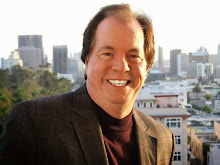
Tom Hinton Addresses US Navy's Leadership on the Power of Leadership

Tom Hinton, America’s expert on business excellence, recently told the the United States Navy's Naval Surface Warfare Center’s Port Hueneme Division that “in a changing global environment, leadership will require high levels of communication, trust, and courage to complete their mission.”

Mr. Hinton, who serves as the chief executive officer of CRI Global, LLC and frequently speaks on leadership, customer service, and teamwork, told over 150 leaders from the Port Hueneme command that today’s emerging workforce will perform at higher levels provided employees understand the organization’s mission as well as their role in helping the organization achieve its goals.

Tom Hinton cited examples from the private sector including Starbucks, Southwest Airlines, Nordstrom, and McDonald’s as companies that work diligently to “include employees in the planning and deployment phases of their business in order to achieve superior results.” Hinton noted, “It is no accident that today’s Reputation Leaders in the private and public sector are customer-focused, innovative, constantly seeking ways to improve their processes, and results-driven.”

Tom Hinton also commended NSWC Port Hueneme and Captain Stephen Huber, USN, for winning the coveted Silver level 2007 Shingo Prize which honors private and public sector organizations for manufacturing excellence. Dubbed the “Nobel prize of Manufacturing” by Business Week in 2000, the Shingo Prize is recognized as the premier manufacturing award in North America. “This is a great accomplishment for Port Hueneme given the fact that you have been on your excellence journey for less than five years and have already distinguished yourself as a recipient of the California Baldrige Award.”

Tom Hinton challenged Port Hueneme’s leadership to “kick it up a notch!” Referring to the poem of Ralph Marston, Hinton told the gathering that “the difference between excellence and mediocrity is simply a matter of attitude and leadership’s commitment to be the best. You are on the path to setting the standard for excellence. Continue to raise the bar for yourselves and your competition!”

### ### ###